By Joey Slowik
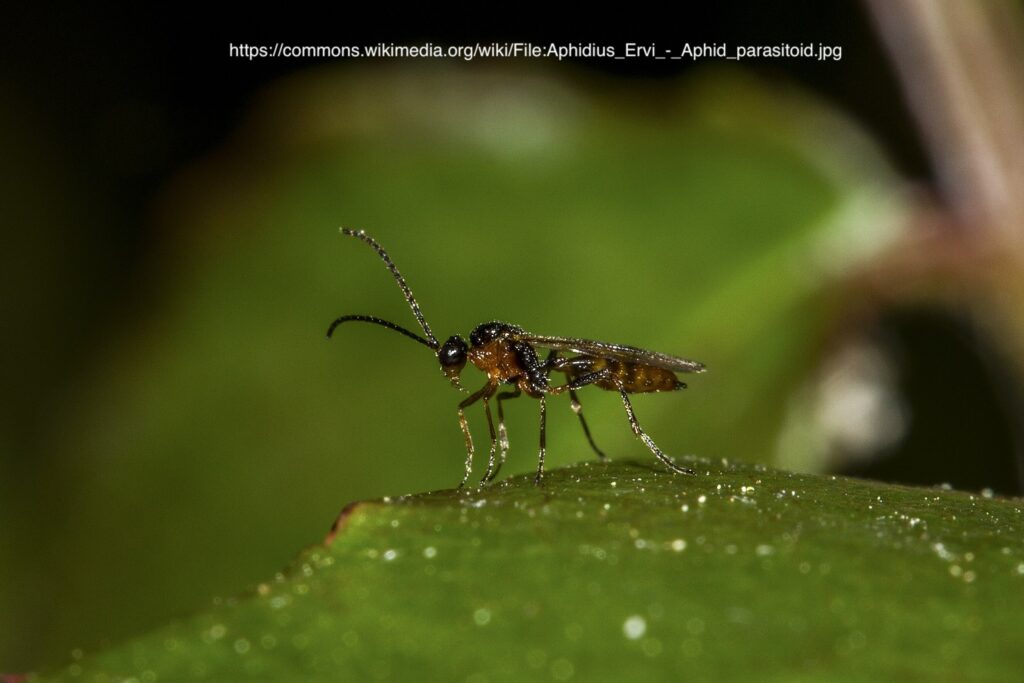
Adult parasitoid wasps, Aphidius ervi, are a small wasp, about 3-4 milimeters. But compared to parasitoid wasps in this group —a group that parasitizes aphids — it’s actually one of the larger species. The wasp is mostly black with lighter colored legs. They have long antenna, a round head, pointy abdomen and some cool traits that help them be successful parasitoids.
Parasitoids will kill their host, whereas parasites live on their hosts without killing them. In this case, the adult wasp lays their eggs on aphids or aphid eggs. The wasp egg is yolkless, which takes less energy for the wasp to produce and is smaller and less noticeable to the host. But having no yolk means that the larvae need to hatch quickly to find some food. This wasp, once hatched, latches onto the aphid embryo or adult aphid and creates a placenta-like structure that allows the wasp larvae to feed off the host.
The wasp larvae eat out the inside of the host, killing it in the process. Once done feeding, the larvae pupate in the aphid body. Then, an adult emerges, leaving the hollowed-out shell of the aphid behind. We refer to these shells as aphid mummies. Parasitoid wasps take advantage of an opportunity when they see one. When they find a cluster of aphids, they may parasitize many of them. For this reason, this species is cultivated as a popular biocontrol species.
There is some debate as to its native range but it showed up in North America shortly after some of its preferred aphid pest hosts did. There are a number of observations of this species found in Alaska and it seems to be surviving in the wild. If you happen to notice some non-moving aphids, look a little closer- it may be a cluster of mummies.
Joey Slowik, IPM Technician
