By Laura Weingartner
A group of 4-H youth, parents, producers and Farm Bureau members gathered one early spring evening to learn more about livestock nutrient requirements and how those requirements change depending on the time of year and the animals’ stage of life.
Jim Vinyard, a livestock nutritionist with the University of Alaska Fairbanks’ Institute of Agriculture, Natural Resources and Extension, presented at the Cook Inlet Aquaculture Center Thursday evening, March 6, at an event sponsored by the North Kenai Peninsula Farm Bureau.

Vinyard discussed details about meeting the nutrient requirements of various livestock. He explained how those requirements are different, depending on whether the animal is maintaining, growing, lactating or gestating. The requirements change depending on the breed, sex and age of the animal as well as the environment in which it lives. By understanding the different factors affecting nutrient requirements, people can make adjustments when needed, like when a cold spell hits or when the animal is lactating, which is the life stage when nutrient demands are highest.
Nutrition requirements cover the energy, protein, minerals and vitamins livestock get from various types of food, including grasses, grains and legumes for cattle and food scraps and mealworms for chickens.
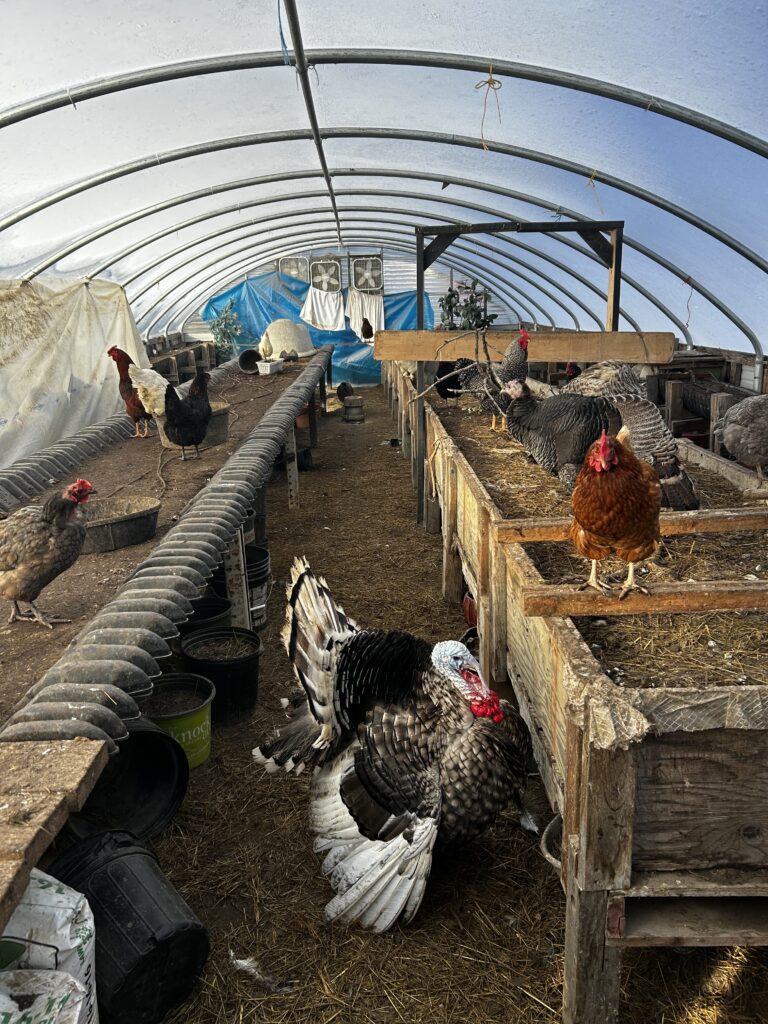
Vinyard lives and works in Palmer at the Matanuska Experiment Farm and Extension Center and made the trip to Kenai to talk to the 4-H students and other interested parties. While there he visited farms raising livestock. These visits highlighted the many different strategies people take to reach their animals’ nutrient needs.
Marcia Knowlton’s primary focus is dairy goats, and she uses ingredients such as kelp and flaxseed to supplement minerals and omega-3 fatty acids in her goats’ diets. Supplementing with omega-3 fatty acids has been shown to improve animal health and reproductive performance while decreasing inflammation and mortality rate. The same has been demonstrated in humans.
Knowlton milks her goats year-round for fluid milk and cheese that she makes and sells to local individuals in a farm share program. Those products are enriched in omega-3s, providing healthy fats to the people consuming them. Vinyard says the typical American diet is deficient in omega-3s as they are not found in high quantities in our typical livestock products.
Another farmer, who raises ducks, geese, chickens, pigs, meat goats, fiber goats and horses uses a variety of feeding methods including fermenting barley in large plastic trash cans to feed her poultry and her pigs.
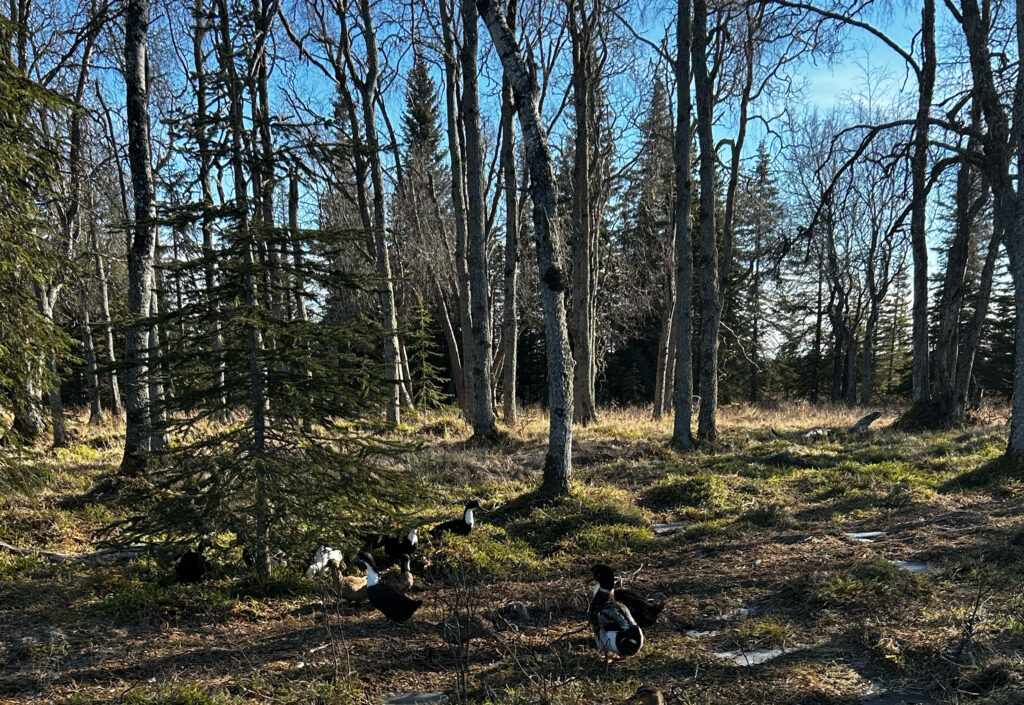
Fermenting grains is an easy way to improve nutrient digestibility for monogastric animals, such as pigs and chickens, as the fermentation process helps break down the parts of the grain that are tough to digest prior to feeding. Nutrients in fermented feed are more digestible and more readily adsorbed to better meet the nutritional requirements of the animals.
Chickens are omnivores and will try to eat just about anything. Because of their non-picky poultry, farmers in Kenai are taking advantage of what otherwise might have been waste. The Lancashire Farm uses local restaurant food scraps in order to supplement their chickens’ feed. Another farmer went a different route; their chickens were working on picking a caribou rib cage clean during Vinyard’s visit.
“Roadkill is a cost-effective method to provide high-quality protein to chickens,” said Vinyard.
The last farmers Vinyard visited were the youngest producers in the area. Two 4-Hers pooled their resources into a sheep farm where they currently have nine ewes and two rams. The farmers, who have been in 4-H since they were young, use as much forage in their sheep diets as possible.
Forage includes plant material foraged in pasture, hay, and silage. Forages are important for ruminant animals like sheep because they are a source of fiber. In the summer, the farmers take advantage of pasture and plan to implement rotational grazing to help clear brush and get more out of their pasture land.
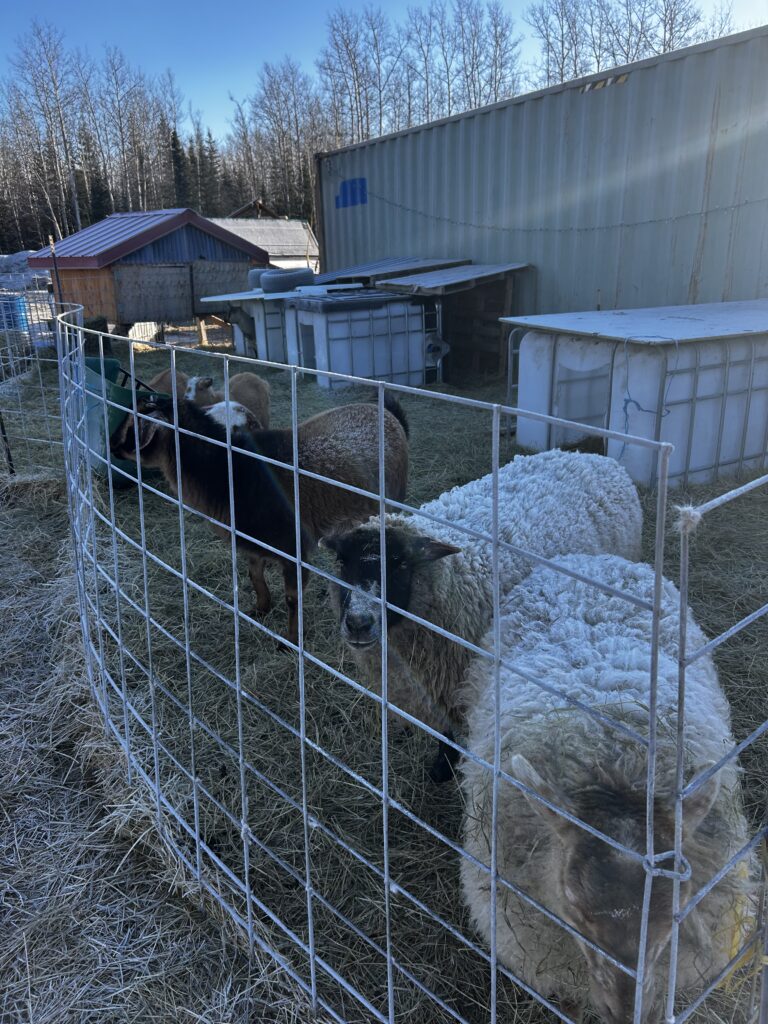
The two young farmers also feed the lambing ewes what’s known as COB to provide extra energy. COB stands for corn, oats, and barley and is mixed with molasses to create a high-energy and tasty feed that helps ewes and their lambs stay healthy.
While the farmers Vinyard visited weren’t using spent brewer’s grain as feed, he did field questions about its use. Spent brewer’s grain is a byproduct of alcohol fermentation often sourced from distilleries or breweries and predominantly fed for protein. The sugars, starches, and even some of the fiber are broken down during fermentation leaving behind protein, some fat and some fiber. When feeding these byproducts, Vinyard explained, it’s important to keep the levels fed to pigs and chickens less than 20% of total feed intake as the fat content in the byproducts could alter the quality of eggs or bacon.
“These visits were very helpful for my research,” Vinyard said. Visiting livestock producers inform him of the type of questions being asked and how he can best address their needs. As one of only two livestock nutritionists in the state, Vinyard’s research has the potential to help many Alaskans raising livestock.
